
From Arita to the World: The Story of Imari Porcelain
To behold a piece of Imari porcelain is to witness centuries of history—a story of artisans and aristocrats, kilns and courts, and a design language that crossed oceans while staying true to its roots. These finely crafted works embody a legacy of skilled artisanship and cross-cultural exchange that continues to resonate with collectors, historians, and design enthusiasts around the world. Imari ware originated in Japan in the early 1600s, but its influence soon spread globally, shaping the works of ceramicists from the Netherlands to England. Today, it remains a touchstone for Asian-influenced decor, with its unmistakable palette of cobalt, iron red, and gold.

17th century Arita Imari plate
Born in Arita, Shipped from Imari
While Imari lends its name to this iconic porcelain style, the pieces themselves come primarily from the kilns of Arita, a small town on Japan's southern island of Kyushu. In the early 17th century, ceramicists in Arita began producing the first true Japanese porcelain after discovering deposits of kaolin, a type of clay essential for high-fired wares. Finished Arita porcelains made their way to the port of Imari to be shipped throughout Japan—a logistical detail that would ultimately give the ware its name, just as its designs were poised to travel far beyond Japan's shores.

The Signature Elements of Imari Design
What sets Imari porcelain apart is its distinctive combination of materials, decorative techniques, and visual structure. From restrained blue-and-white wares to richly polychrome pieces, Imari designs are built through deliberate layering rather than surface excess.
Imari porcelain is made from refined kaolin-rich clay, discovered near Arita in the early 17th century. Fired at high temperatures, this material produces a luminous white porcelain body that allows decoration to appear crisp and clearly defined. Its strength supports fine linework and layered ornamentation, forming the foundation for all Imari designs.
At the decorative core of Imari is sometsuke (染付)—cobalt blue underglaze painting applied directly to the porcelain body before glazing. Sometsuke is essential to both Japanese blue-and-white and polychrome Imari, where blue outlines establish composition, define borders, and anchor later layers of color and gold. Even in the most elaborate pieces, sometsuke provides the structural framework that holds the design together.
Over the blue underglaze, artisans often applied aka-e (赤絵), or iron red overglaze enamels, introducing warmth and contrast. These red accents are frequently paired with kinrande (金襴手), hand-applied gold decoration inspired by brocade textiles, adding richness and emphasis. Together, blue, red, and gold form the classic polychrome palette of Imari ware.
Designs are often organized using panel or reserve compositions, known as kakubuchi (角縁) or cartouches. These framed sections divide the surface into visual fields, allowing figurative scenes, floral motifs, and patterned grounds to coexist while maintaining balance.
Floral and botanical motifs are central to Imari decoration, including stylized chrysanthemums, peonies, and lotus blossoms, often set against geometric patterns. Birds, landscapes, and auspicious symbols appear frequently, contributing movement and visual narrative across the surface.
Rather than strict symmetry, Imari compositions often favor asymmetrical arrangements, where negative space is used intentionally to guide the eye. The result is a surface alive with rhythm and contrast, with every motif contributing to a carefully orchestrated whole.
These foundational elements not only shaped Japan's blue-and-white traditions, including Ai Kutani, but also underlie the rich polychrome styles of Nabeshima, Kutani, Hirado, and other celebrated Imari wares.

The design anatomy of an Imari Porcelain plate
Ai Kutani and Japanese Blue-and-White Porcelain
While Imari porcelain is often associated with reds and golds, Japanese blue-and-white porcelain has a long and celebrated tradition, prized for its elegance and intricate designs. Early exported pieces, known as Ko Imari, date from the mid-17th to early 18th century and were shipped from Arita via Imari port.

Arita plates in the Ai Kutani style, circa 1700.
Ai Kutani refers to blue-and-white wares executed in the Kutani aesthetic, with expressive brushwork and detailed motifs. Although originating in Kutani, skilled artisans in Arita also produced Ai Kutani-style pieces, reflecting the fluid exchange of techniques across Japanese kilns. These styles highlight that Imari porcelain was never solely about polychrome decoration—blue-and-white wares remain a central part of its enduring appeal.
Other Celebrated Japanese Imari Producers
Beyond Arita, several regions and styles contributed significantly to Japan's ceramic heritage. Nabeshima ware is known for its precise, refined patterns, while Kutani ware features bold colors and intricate designs. Other historic porcelain regions include Seto and Mino, major centers for everyday and decorative wares; Satsuma, celebrated for finely painted, creamy-glazed pieces; and Bizen, famous for unglazed stoneware.
Together, these regions demonstrate the diversity and creativity of Japanese ceramics, with Imari remaining a standout in both technical skill and decorative artistry. Collectively, they showcase centuries of craftsmanship, innovation, and artistic expression that continue to inspire collectors and enthusiasts worldwide.

From left to right: Kakiemon, Nabeshima-yaki, and Arita.
Imari Arrives in Europe
In the mid-17th century, the Dutch East India Company began importing Japanese Imari porcelain to Europe. These vibrant, intricately decorated wares were unlike anything Europeans had encountered, and they quickly became coveted objects among aristocrats and wealthy merchants.
To European eyes, Imari porcelain appeared both foreign and remarkably refined, standing apart from existing ceramic traditions and quietly redefining expectations of luxury tableware.
The European Embrace of Imari
European ceramicists were captivated by the beauty and technical sophistication of Imari porcelain. In the Netherlands, the city of Delft became a center for Imari-inspired faience, with local potters adapting the aesthetic to suit their own materials and methods.
As European porcelain production advanced in the early 18th century, manufactories such as Meissen in Germany and Chantilly in France began incorporating Imari and Kakiemon designs into their wares. These Japanese palettes and patterns added a sense of novelty and elegance to European porcelain, encouraging experimentation across the continent. As these motifs traveled from one manufactory to another, Imari became less a singular import and more a shared point of reference—interpreted differently from region to region.

A Meissen (Germany) Imari Plate, Circa 1735-40
The English Imari Legacy
In England, the Imari style found its most enduring expression in the work of 18th- and 19th-century porcelain makers. Robert Chamberlain's Worcester porcelain factory and Royal Crown Derby were among the most prominent producers of English Imari.
These factories translated the bold colors and intricate patterns of Japanese Imari into a distinctly English idiom, characterized by rich tones and an exuberant yet balanced approach to decoration. Crown Derby's Old Imari (1128) and Traditional Imari (2451) patterns exemplify this synthesis, blending Asian influence with English design sensibilities. Over time, Imari in England came to signify not only global exchange, but also domestic ritual—appearing on tea tables and in drawing rooms as part of everyday life.

On the left, Royal Crown Derby's Old Imari (1128) and on the right, Traditional Imari (2451)
A Lasting Influence
Imari porcelain's journey from Japan to Europe is ultimately a story of cultural exchange and adaptation. From the kilns of Arita to European manufactories and English tea tables, Imari patterns continue to resonate today. Their enduring appeal lies not only in their bold palette and intricate motifs, but in their ability to connect history, craftsmanship, and design across centuries—an influence that remains deeply felt in both ceramics and decorative arts.

eclectiQuas: From Fine Imari Porcelain to Upcycled China Jewelry
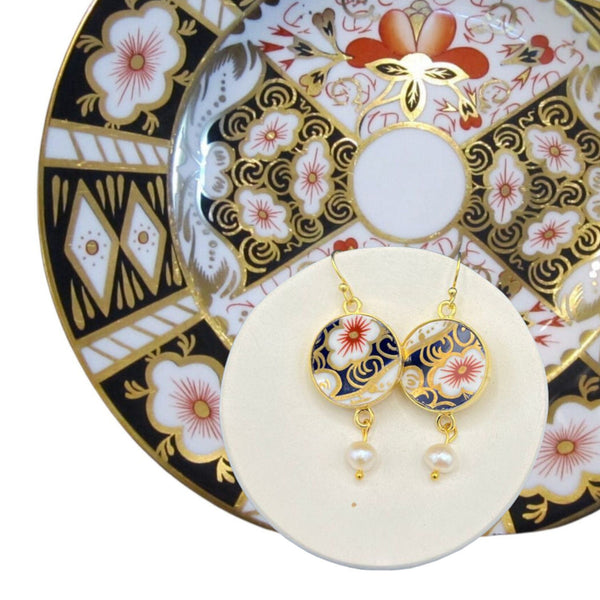
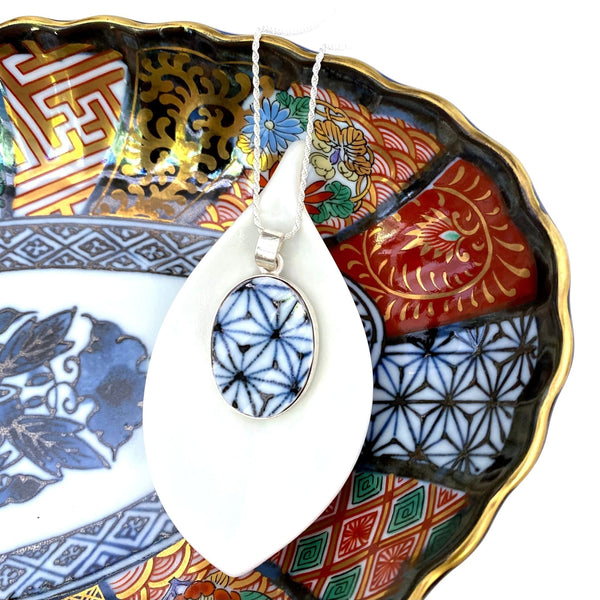
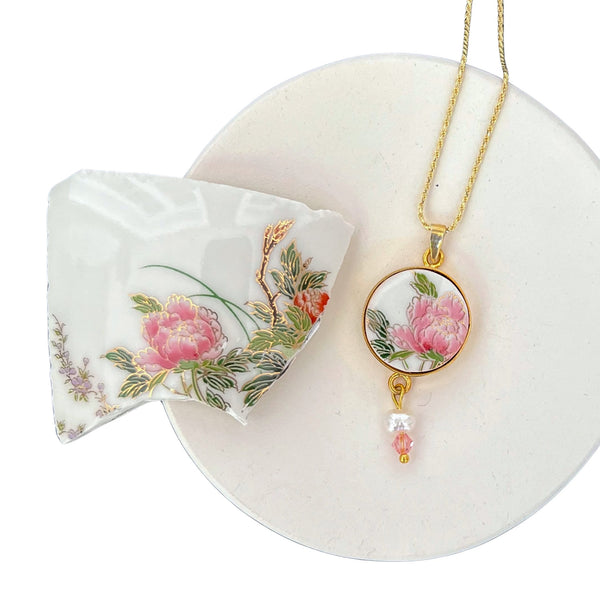
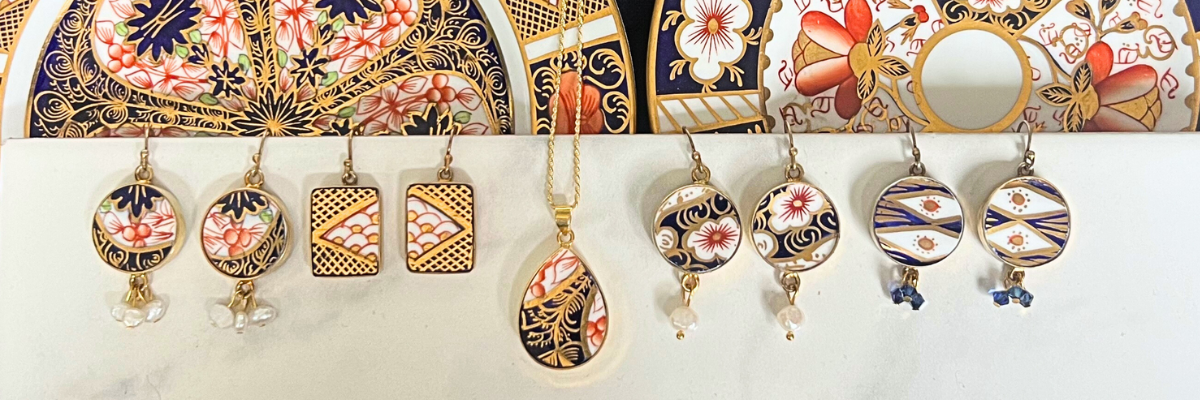
Inspired by the beauty and intricate designs of vintage Japanese Imari porcelain and antique English Imari china, eclectiQuas creates elegant broken china jewelry that gives new purpose to treasured patterns. Each handcrafted pendant necklace, earring, and adjustable ring combines vintage porcelain featuring the signature Imari palette, richly layered with deep blue and warm red tones, accented with gold, together with gold plated sterling silver settings and quality embellishments, including lustrous freshwater pearls and Swarovski crystal elements. These distinctive designs transform traditional Japanese porcelain into heirloom jewelry meant to be treasured for generations. Versatile for any occasion, eclectiQuas jewelry lets you bring the beauty of Imari porcelain into your own unique, personal style.